
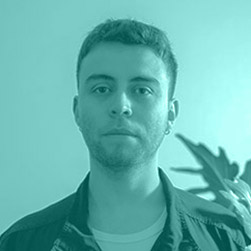
Affiliated member
Research
Andrés investigates energy transition processes and the omissions embedded within them, particularly as these transitions are often framed as the only possible pathway forward. His work is grounded in a critique of economic growth models that equate progress with increased material and energy consumption, without questioning the broader purpose or consequences of such growth.
Fieldsite
His research focuses on examining the omissions of lithium-based energy transitions, which are promoted as state policy in Chile. He does so through the analysis of public policies—such as the National Lithium Plan—and by engaging with stakeholders and public institutions involved in lithium mining in Santiago. These omissions reveal ongoing processes of ecological depletion, alongside the emergence of new forms of extractivism, such as lithium extraction, which serve as the material foundation for technologies framed as morally urgent and necessary for decarbonization.
Biosketch
Andrés is an anthropologist from the Pontificia Universidad Católica de Chile. His work has focused on the study of deep ecologies and their interrelation with contemporary extractive activities. He has conducted research on supply chains of raw materials extracted from rural regions in Chile—such as grapes, salmon, and lithium—that sustain global industries. His research interests include environmental conservation, environmental conflicts, political ecology, and the intersections between energy, politics, and technology.
Previous publications
Bonelli, C., & Pavez, A. (2025). “Sonambulismo verde: Minería, entropía y los límites de la sostenibilidad en el norte de Chile.” Antípoda, 60, 247–272.
Bonelli, C., & Pavez, A. (2025). “White Mining’s Green Dream: Entropy and the mirage of sustainability in Northern Chile.” The Extractive Industries and Society, 23, 101683.